

SoundCloud: The Music You Love
SoundCloud
I started using SoundCloud because I wanted something less predictable than a conventional streaming library. The first impression is not simply a catalog of familiar albums. It feels more like a place where finished tracks, remixes, DJ sets, independent releases, deep cuts, and playlists sit close together. That variety is the app’s strongest identity, but it also means you need a slightly different listening habit than you might use with a more traditional music service.
SoundCloud is a free music and audio app from SoundCloud, available for Android and iOS, with a Teen content rating. It has been around since December 21, 2010, and its scale is easy to notice: the app has passed 100 million installs, with a 4.7 average from around 7.5 million ratings and roughly 386 thousand written reviews. Those figures suggest a mature service, but the real question is whether its discovery-focused approach suits the way you listen.
How I use SoundCloud from the first search to a dependable listening routine
My baseline workflow is simple. I search for an artist, track, genre, mix, or mood, then listen beyond the first result instead of treating the search page like a final answer. This matters because SoundCloud often rewards curiosity. A familiar song may lead to a live variation, an unofficial remix, a related producer, or a long-form set that would not appear in the same way inside a standard album-first service.
I usually begin with one reliable starting point rather than opening the app without a plan. If I want background music while working, I choose a playlist or a longer set. If I want to find new artists, I search for a track I already like and then move through related recommendations and creator pages. This two-mode approach keeps the experience from becoming random: one path is for uninterrupted listening, and the other is for exploration.
The app’s free access makes that experimentation easy. I can try an unfamiliar creator without committing to an album or changing my main music library. That is especially useful for electronic music, independent releases, regional scenes, edits, and genres where individual creators publish frequently. SoundCloud is often at its best when I treat it as a discovery tool rather than a replacement for every other audio app I use.
Related News

Instagram Is No Longer a Photo App. It Is an Attention Engine

Microsoft Teams Mobile: When Collaboration Becomes Navigation

How the NFL App Adapts to Android and iOS Updates

Temu: Elevate Your Shopping Experience to Billionaire Status

Why Traffic Rider Works Best as a Precision Reflex Game

How Google’s Find Hub Transforms Everyday Searches
One practical habit is to save promising finds immediately, but not every interesting result. I keep my saved collection for tracks I expect to revisit, while using playlists for broader themes such as late-night listening, instrumental work, or new discoveries. Without that separation, a saved library can become a large pile of half-remembered tracks that is difficult to use later.
For a realistic everyday example, imagine a commute where I have twenty minutes and do not want to make decisions constantly. I would prepare a playlist in advance, check that the tracks I need are available for offline listening when that option applies to my plan, and start playback before leaving home. On the return trip, I might search for a DJ set or follow recommendations from one artist. The first routine is dependable; the second keeps the app feeling fresh.
Why the search experience needs a little judgment
Search results can contain several versions of what looks like the same track. You may find an official upload, a repost, a remix, a live recording, or a longer mix that includes it. I have learned to check the creator name and the track length before saving anything. That small pause prevents a playlist from filling with duplicate versions or with an upload that does not match what I intended to hear.
Gallery
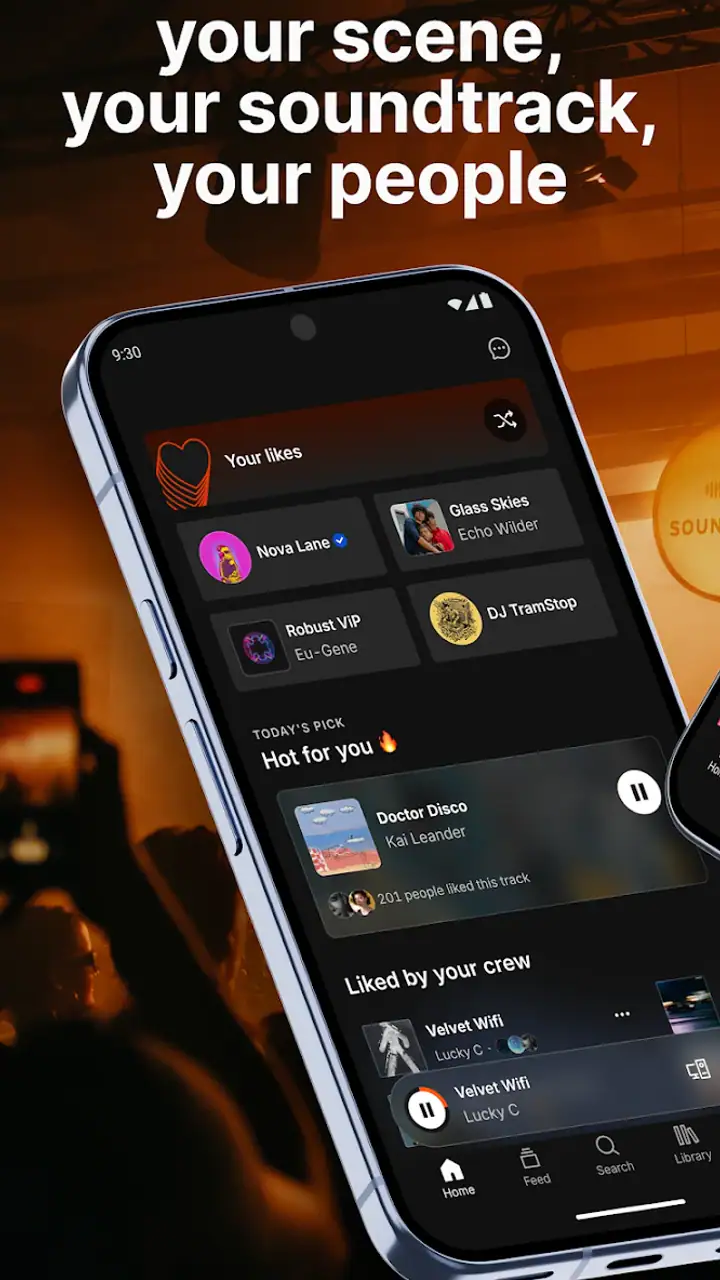
This is also where SoundCloud differs from a conventional subscription catalog. On an album-centered service, I generally trust the album structure to organize an artist’s work. Here, the upload itself is often the important object. That gives creators more room to publish unusual formats, but it places more responsibility on me to identify the version I actually want.
I also recommend listening to a short portion before adding a track to a serious playlist. A title can be familiar while the upload is a different edit, a preview, or a performance with a very different sound. This is not a flaw unique to one screen; it is a consequence of SoundCloud’s broad creator-driven ecosystem. The reward is variety, and the trade-off is less uniformity.
Settings I check before relying on the app
The first settings I review are the ones connected with playback, data use, and offline listening. I do this before a trip or a long work session, rather than discovering a problem when I have a weak connection. The exact choices available can depend on the account and device, so I focus on the principle: decide in advance when the app may use mobile data and which listening material needs preparation.
Offline listening is particularly useful for people who travel through unreliable coverage or want to avoid interruptions. I would not assume that every item I can stream is automatically ready for offline use. Instead, I prepare the specific playlist or releases I expect to hear and verify them while connected. This is one of the most valuable habits for reducing last-minute surprises.
Notifications deserve attention too. SoundCloud can be more enjoyable when it alerts me about activity that genuinely matters, such as creators or releases I chose to follow. Too many alerts, however, can turn discovery into noise. I prefer a selective approach: follow artists whose new uploads I would actually open, and leave casual discoveries out of that group until they prove useful.
Audio quality is another setting worth considering alongside your situation rather than treating the highest available choice as automatically best. At home on a stable connection, quality may matter more. During mobile listening, a lighter setting can make a practical difference to data use and playback consistency. I choose based on where I am listening, the headphones I am using, and whether the session is focused listening or background sound.
Because this is a music and audio app, headphone controls and device-level audio settings can shape the experience as much as the app itself. I test pause, play, skipping, and resuming from the lock screen or connected headphones before starting a long session. If a particular phone or accessory behaves differently, knowing that early is better than trying to troubleshoot during a run or commute.
The free price is a major reason to try it, but in-app purchases range from $5.99 to $114.00 per item. I would examine the available plan choices carefully before paying, especially if my main reason for installing is offline listening or fewer interruptions. A paid option may make sense for someone who uses SoundCloud daily, while a casual listener may prefer to keep it as a free discovery companion.
Small shortcuts that make discovery less tiring
My fastest pattern is to start with a specific anchor: an artist, a subgenre, a set, or a track that represents the sound I want. Broad searches such as “music for work” can be useful, but they often create more browsing than listening. A precise starting point gives the recommendation flow a better direction and makes it easier to judge whether the next suggestion is genuinely relevant.
Another useful pattern is separating discovery sessions from listening sessions. During discovery, I allow myself to skip quickly, inspect creators, and save only the strongest finds. During listening, I stop searching and let a chosen playlist or set run. Mixing both activities in every session creates unnecessary interruptions and makes it harder to remember which tracks were actually good.
For DJ sets and long mixes, I use a different standard than I use for individual songs. I check the total length, the mood, and whether I want a continuous performance or a collection of separate tracks. A set can be ideal for cooking, studying, or traveling because it reduces decisions, but it is less convenient when I need precise control over every song.
Playlists also work better when I give them a clear job. A playlist called “new music” can quickly become confusing, so I prefer labels based on how I will use it: focused work, evening walk, energetic start, or tracks to investigate later. This is not a flashy feature; it is a simple organizational choice that makes the app’s large range more manageable.
I avoid saving every repost or alternate version until I know which one I prefer. If several uploads are related, I listen to enough of each to compare the sound, length, and overall presentation. This keeps my collection cleaner and helps me understand which creators are worth following rather than merely collecting isolated tracks.
When I find an artist I like, I explore the creator’s broader page instead of stopping at one successful track. SoundCloud’s value often appears in the surrounding material: older uploads, experiments, mixes, or songs that do not fit a standard release pattern. The downside is that quality and presentation may vary more than they would in a tightly curated catalog, so I treat the artist page as a starting point, not a guarantee.
Where experienced use still meets real limits
The biggest limitation is inconsistency. SoundCloud can contain brilliant discoveries and rougher uploads in the same search journey. Volume, artwork, naming, and release structure may differ from one creator to another. I enjoy that openness, but I would not recommend the app to someone who wants every release organized with the same polished album metadata and predictable availability.
Availability can also affect a carefully built routine. A track that works today may later be unavailable in a particular context, or an upload may not be the version I expected. I reduce the impact by keeping important listening plans flexible and by not relying on one obscure upload as the only source for a favorite session.
The free experience is generous for exploration, but people who want uninterrupted, controlled listening should examine the paid choices before building their entire routine around them. The presence of in-app purchases means the free installation is not the same thing as every possible listening experience. I see that as a reason to test the app honestly for a few days before deciding whether a purchase matches my habits.
SoundCloud is also not my first choice when I need a highly structured personal music library, detailed album collecting, or a uniform approach to mainstream releases. A more traditional streaming alternative can be better for that job. I would choose SoundCloud when creator variety, mixes, independent uploads, and unexpected versions matter more than perfect catalog consistency.
On the other hand, someone who mainly listens to DJ sets, emerging artists, remixes, or niche scenes may find the usual alternatives frustratingly narrow. SoundCloud’s advantage is not just the number of tracks; it is the range of formats and the feeling that the next worthwhile discovery may come from outside the standard release cycle.
Who should install it, and who should skip it?
I recommend SoundCloud to listeners who enjoy finding music before it becomes familiar, following individual creators, and moving between short tracks and long-form audio. It is also a strong second app for someone who already has a conventional streaming service but wants a wider discovery layer. The free entry point makes it easy to test without immediately changing your main setup.
I would be more cautious if your priority is a perfectly organized catalog, guaranteed access to every familiar recording, or a completely hands-off listening experience. The app asks for more participation: you search, compare versions, decide what deserves a follow, and maintain your own playlists. That involvement is rewarding for curious listeners but tiring for people who simply want to press play and trust the library.
Parents should also remember the Teen content rating. SoundCloud contains a broad range of creator-uploaded audio, so I would not treat it as a tightly filtered children’s music service. The rating is an important part of deciding whether it fits a family device or a younger listener’s routine.
My verdict after building a repeatable routine
SoundCloud works best when I use it deliberately. I begin with a clear search, verify the exact upload, save selectively, organize playlists by purpose, and prepare offline listening before I need it. I keep notifications focused and adjust quality and data choices to the situation. Those habits turn a potentially overwhelming stream of uploads into a personal discovery system.
My honest view is that the app is more adventurous than orderly. That is precisely why I return to it, but it is also why I would not replace every other music service with it. The platform’s free access, huge reach, and creator-centered variety make it excellent for finding sounds that standard catalogs may not emphasize. Its uneven organization and variable upload quality mean I need to curate my own experience.
With a 4.7 average and over 100 million installs, SoundCloud is clearly not a niche experiment anymore, yet it still feels more open-ended than a conventional music shelf. I would recommend it to anyone who enjoys the search as much as the final playlist. If you want music that feels personal, unexpected, and connected to individual creators, it is worth installing. If you want a completely uniform catalog with no sorting decisions, a different option will probably suit you better.
My bottom line: use SoundCloud as a discovery engine first, then shape it with a few repeatable habits. That approach brings out its best qualities while keeping its rough edges manageable.
FAQs for SoundCloud: The Music You Love
What is SoundCloud, and how does it work?
SoundCloud is a platform designed for music creators and listeners to share, discover, and enjoy music. Users can upload their own tracks, follow their favorite artists, and create playlists. It's available on both Android and iOS, offering a diverse library of music across genres, including indie, hip-hop, electronic, and more.
Is SoundCloud free to use, and are there any subscription options?
SoundCloud offers a free version that allows users to listen to music and follow artists with occasional ads. For those seeking an ad-free experience, offline listening, and access to premium content, SoundCloud Go and SoundCloud Go+ are available as paid subscriptions, offering enhanced features and a broader music library.
Can I upload my own music to SoundCloud, and are there any limitations?
Yes, users can upload their own music to SoundCloud. The free version has a limit on the total upload time, typically around 180 minutes. For artists needing more space and advanced features, SoundCloud Pro Unlimited offers unlimited uploads, detailed analytics, and additional tools for a monthly fee.
How is SoundCloud different from other music streaming services?
SoundCloud is unique in its focus on emerging artists and user-generated content, offering a platform for independent musicians to share their work. Unlike traditional streaming services, SoundCloud provides a space where fans can directly interact with artists, discover new music early, and enjoy a more personalized listening experience.
Is SoundCloud safe to use, and how do they ensure user privacy?
SoundCloud is committed to user safety and privacy. They implement industry-standard security measures, such as encryption and data protection protocols, to safeguard user information. Users are encouraged to review SoundCloud's privacy policy and adjust their privacy settings to control what information is shared and how it is used.
Pros
- Extensive music library with diverse genres.
- User-friendly interface
- easy to navigate.
- Great platform for discovering new artists.
- Offline listening available for premium users.
- Seamless integration with social media.
Cons
- Ads can be intrusive for free users.
- Limited offline features in free version.
- Occasional streaming interruptions.
- Subscription cost can be high for some.
- Not all tracks are available offline.


